We know that packing for an Apogee summer adventure camp can feel a little overwhelming: what’s essential, what’s optional, what isn’t allowed, and what’s going to sit at the bottom of your bag all trip without being worn? The good news is, each trip has its very own detailed packing list to help make this process easy. If you’re curious about what you might need to bring on your teen adventure, you can download the trip-specific packing list straight from each trip webpage! If you closely follow the trip packing list, we guarantee you’ll feel good about what you brought on the trip.
After 25 years of running teen outdoor adventure trips, we’ve refined these packing lists to include enough items to be comfortable, but not so many items that you’re toting around the world’s heaviest pack. This guide explains the thought process behind our trip packing lists, and what are important things to consider when packing for an Apogee trip.
If you’re looking for specific product recommendations or hiking footwear recommendations, be sure to check out our Gear Recommendations blog and our Hiking Footwear blog.
Sleeping Gear
We all know sleep is important, but on an Apogee outdoor adventure trip, it is doubly important! Long, active, fun-filled days mean your body needs quality rest to recover.
For most of our camping-based trips, we recommend a synthetic sleeping bag (20–30°F, depending on your trip). Why synthetic? Unlike down or cotton sleeping bags, synthetic insulation still keeps you warm if it gets damp, and it’s easier to care for over the course of a multi-week trip. We also ask students to bring a sleeping pad (inflatable or foam, depending on your trip). Inflatable sleeping pads are typically more comfortable for sleeping, however foam ones are also an excellent option for the ease of packing up in the mornings when you are switching sites (and are generally less expensive). For some trips where packability is an important consideration (Europe Coast to Coast, for example), we require inflatable sleeping pads, as they take up a lot less space than foam sleeping pads do.
For our teen adventure camps that stay indoors (or on trips with stays in mountain huts called “rifugios”), we ask student to bring a sleeping bag liner. This is, effectively, a lightweight bedsheet sewn together on three sides, making for a lightweight, very packable sleep-sack. For these, because they will be used exclusively indoors, cotton is okay. Sleeping bag liners give you a layer of separation between yourself and the mattress without being too hot for indoor use.
Pro-tip: Yes, we recommend a synthetic sleeping bag, but if you already have a down sleeping bag, it will work just fine. If you have a down sleeping bag, just be sure you get a waterproof stuff-sack for it! That said, cotton sleeping bags are still a no-go, as they are too bulky for Apogee trips.
Staying Dry
At some point, unless you have the best weather luck in the world, it will probably rain during your Apogee trip. But rain doesn’t stop us from exploring and having fun! The key is to be ready for the rain. You will need a waterproof rain jacket (this is worth investing in), resealable freezer bags (1–2 gallon size), and a few large garbage bags (thick contractor-grade bags are even better). These items go a long way in keeping your sleeping bag, clothes, and essentials dry. Leaders will talk with students about best ways to store their gear using the garbage bags and ziplocs (for example, lining your sleeping bag stuffsack with a garbage bag for waterproofing purposes) so that you can enjoy the summer showers and still be dry in the evening at camp!
The topic of rain pants deserves its own paragraph. On trips in colder, wetter climates, rain pants are an essential piece of gear and are required on the packing list. But on most trips, rain pants are listed as “optional.” In these cases, we recommend you send your child with rain pants if they meet one of the following criteria:
- They already own rain pants;
- They tend to run cold or have a strong aversion to being wet;
- They react particularly poorly to bug bites (fun fact: mosquitos generally cannot penetrate waterproof clothing!).
Pro-tip: To determine whether the rain jacket (or rain pants) you already own is waterproof or simply water resistant (which is not good enough), employ the “suck test.” To do this, bring a layer of the fabric to your mouth and try to suck air through it. If you’re able to suck air through it, it isn’t water proof. But if no air comes through, you’re good to go!
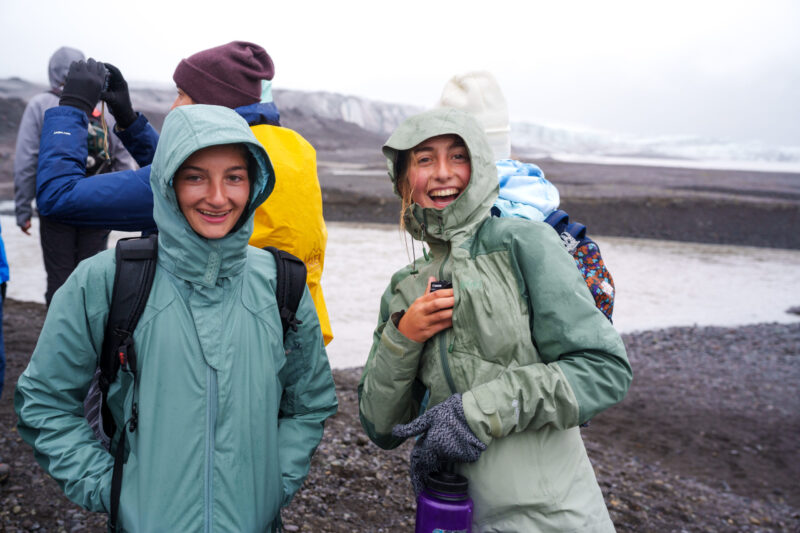
Layering up on Iceland Mountains and Coast for a rainy morning hike!
Hydration
Staying hydrated is essential on every Apogee trip. Each trip is a little different (consult your trip’s packing list for more details), but we’ll do our best to break it down simply for you here:
Hiking trips:
- Option One: Bring two to three one-liter water bottles (durable and lightweight, such as Nalgenes)
- Option Two: Bring a 2.5 to 3-liter hydration bladder (that can fit in your backpacking backpack and/or daypack) along with one one-liter water bottle.
Biking trips:
- Option One (recommended): Bring a 2.5 to 3-liter hydration pack (like this Osprey pack) for hydration while riding and a one-liter water bottle (like a Nalgene) for use around camp. The hydration pack is much easier to drink out of while riding than cycling-specific water bottles are, which encourages kids to drink more water throughout the day!
- Option Two: Bring two cycle-specific water bottles (that fit in a bicycle water bottle holder) for hydration while riding and a one-liter water bottle (like a Nalgene) for use around camp.
Service/College Prep Programs:
- Bring two to three one-liter water bottles (durable and lightweight, such as Nalgenes)
Pro-Tip: While insulated stainless steel water bottles (like Yetis, Hydro Flasks, Owalas, etc.) are great for everyday home use, they tend to be heavier and less practical on an Apogee trip and cannot fit in a bike water bottle holder. Lightweight, durable bottles are the way to go here.
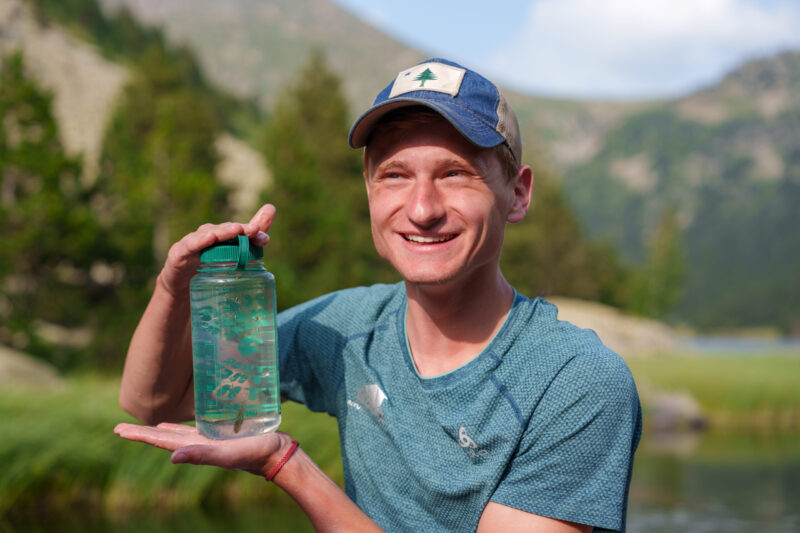
Staying hydrated on Pyrenees Mountains and Coast!
Clothing
Clothing makes up the bulk of the items on your packing list, and is also the area where folks tend to go rogue from the packing list most often (and wind up overpacking). You may be thinking: “only three pairs of shorts for a two week trip? That can’t be right!” Actually, we’re here to tell you it is! A few things to remember if you think about adding clothing items beyond what is listed on the packing list:
- Any trip 12 days or longer will have at least one opportunity to do laundry throughout the trip
- Because we ask for most clothing items to be synthetic or wool (both quick-drying materials), even if you sweat in a shirt on one day, if you give it a few minutes to dry out before packing it away, it can easily be worn again before you wash it.
- There is really no time where wearing bulky cotton items such as jeans and a cotton sweatshirt is appropriate on an Apogee trip (save for on Maine Coast College Essay). If you emerge from your tent wearing jeans, your leaders will just have you change… so save yourself the trouble and don’t pack them!
Pro-tip: The clothing area of the packing list is the easiest place to save money. Don’t have three synthetic t-shirts or a “medium-weight, down or synthetic fill, packable, insulating jacket” (yes, we pulled that straight from our packing lists)? No need to get brand new outdoor clothes from REI — head over to your local Goodwill or thrift shop and you can generally find some great synthetic clothing options. Wholesale stores like Costco, BJs, or Sam’s Club also typically have great deals on synthetic gear, and if you don’t have a membership to one of those stores, Walmart often some great well-priced options. All this to say, you don’t need your clothes to be Patagonia or LL Bean-brand (although those are great, too!). As long as you find clothing that meets the criteria on the packing list, generic brands can help you save a lot of money on clothes!
What Not to Pack (Read This Twice!)
This might be the most important section! As we move around frequently on our trips, we really want to avoid being overloaded with gear that you never use (or only use once). Please bring everything that is on your packing list, but please don’t bring…
- Too many clothes
- As mentioned above, you will re-wear items, and you’ll most-likely have laundry opportunities. Pack light.
- Cotton clothing
- Cotton stays wet and cold. Stick to synthetic or wool fabrics that dry quickly. The only exceptions are generally noted on the packing list (e.g., shirts to wear around camp, underwear, and pajamas).
- Bulky extras
- Large pillows, oversized towels, heavy blankets, etc.
- “Contraband”
- Electronics are not allowed on Apogee trips, so don’t bring them! Similarly, we don’t allow weapons, which includes Swiss Army Knives and other “camp knives.” All cutting utensils for cooking will be provided by Apogee, so there’s no need to pack anything of the sort.
A Few More Pro Tips
- Test your gear ahead of time: Break in your boots, try out your pack, and make sure everything fits comfortably.
- Stay organized: Stuff sacks or labeled ziploc bags can make a big difference. Many an Apogee student has claimed they “don’t have something” only for it to be found when their trip leader goes through their bag with them. Staying organized means being more efficient when packing for the day, which in turn means more time for fun and adventure!
- Learn how items are packed while on trip: Curious about how all of this gear is going to fit on your bicycle or in your backpacking pack? Check out our two videos that show how it’s done. Your trip leaders will also thoroughly explain this on trip.
- Carry-on the important things: Each packing list has a page at the end for “packing instructions” where we explain what you should carry on to the plane if you’re flying to the trip start. Generally, these are things that you absolutely need on day one of the trip, in case your checked bag gets delayed. We generally suggest you carry-on:
- Sleeping bag
- Water bottle
- Any important medications
- Your hiking boots (wear them on the plane)
- Bike helmet (if applicable)
- When in doubt, check the packing list: If an item if not listed on the packing list, you likely do not need it.
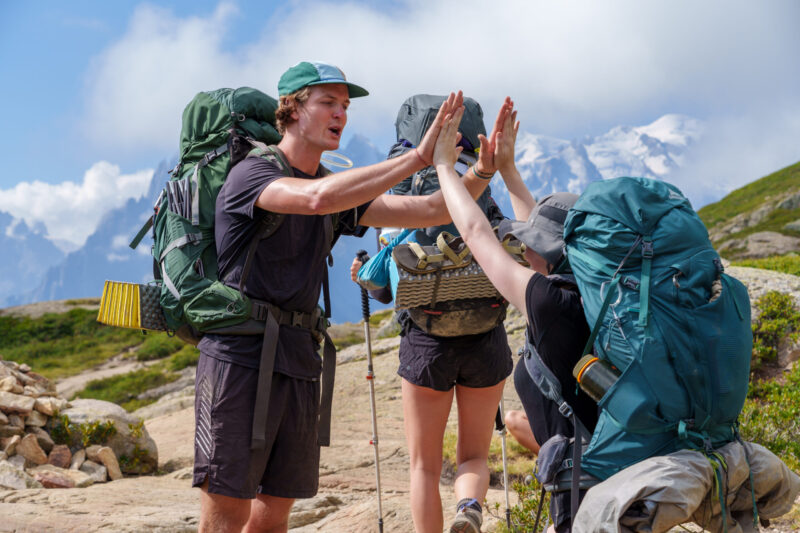
Conquering miles on Alps Explorer is easy with the right gear!
The Bottom Line
Packing isn’t about having the most gear – it’s about having the right gear. When you’re comfortable, prepared, and not weighed down by unnecessary items, it makes your Apogee experience even more enjoyable. If any other questions arise as you’re packing, please feel free to reach out to info@apogeeadventures.com or give us a call at 207.725.7025.
Now get ready to make some memories!