Whether your child is a seasoned traveler or will be traveling alone for the first time, we know that air travel to and from Apogee’s teen outdoor adventure trips can be an anxiety-inducing event for many parents. We’re here to demystify the process and tell you it’s all going to be okay! Every year we have hundreds of students flying to our programs all across the world; we have become experts in the realm of teenagers flying on their own. This guide to student travel to/from their Apogee trip covers the essentials so you can focus on what really matters — the adventure ahead.
Passports and ID: What You’ll Need
For international Apogee trips (programs in Europe and Costa Rica): a valid passport is required. Make sure your child’s passport won’t expire within 90 days of their arrival date, as this will cause many countries to turn folks away at the border (even if your child’s trip is shorter than that 90-day window). Apogee leaders will collect student passports upon arrival and store them for safekeeping throughout the trip. Pro tip for families: Passport applications can take several weeks to process, so start early — ideally three to four months before your departure. Expedited processing is available for an additional fee if time is short.
For domestic U.S. trips (programs in any of the 50 states or Puerto Rico): travelers under 18 (which makes up most Apogee students) are not required by TSA to show photo ID. However, if your child does have photo ID, whether it is state-issued (driver’s license, learner’s permit) or non-state issued (school ID), it’s a good idea to bring it just in case. That said, we do not recommend sending your child with their passport on a domestic US trip, as they are unnecessary and it is not worth the risk of losing your child’s passport. For the handful of Apogee students who are 18 or older, make sure you have a photo ID that is REAL-ID compliant.
Special cases: for our Vermont to Montreal and Caribbean Service: Virgin Islands trips, there are specific documentation requirements. A valid passport will satisfy the documentation requirements for either trip, but for more information please take a look at your trip packing list if you are enrolled on one of these programs.
Flying Independently: Meeting Up with Your Leaders
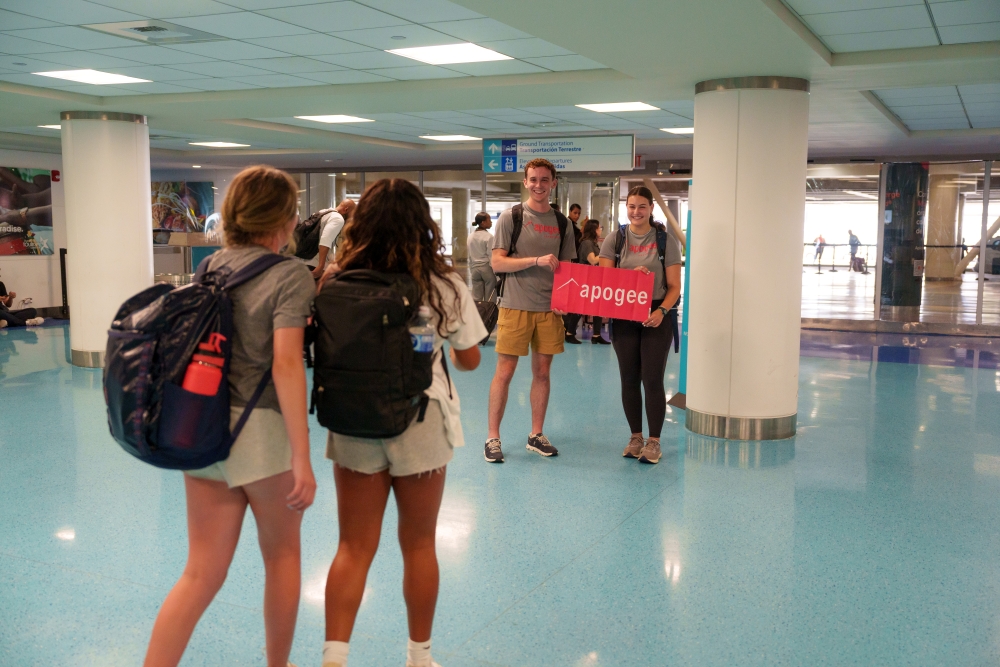
Flying to one of our teen adventure camps is relatively straightforward: you book your flight, fly to the designated arrival airport, and your Apogee leaders will be there to meet you. Apogee staff do not travel with students — your trip leaders will already be at the trip start location on arrival day.
A more detailed breakdown on how it works:
- Book your flight within the designated arrival/departure windows. We have designated arrival and departure time windows for every trip (usually somewhere between a 3 and 4 hour window). This allows the group to have scheduled activities or transit on the first day, as it wouldn’t be very much fun for anyone to have Day 1 be spent waiting around the airport all day! While we ask you to schedule your child’s flight within these time windows, we understand that there are sometimes delays or cancellations outside of your control. If this happens, rest assured that we will work with you to make sure an Apogee staff member is there to meet your child at the airport.
- Share your flight itinerary with Apogee before your trip. In Early April, we ask enrolled families to share their child’s flight information through an online form. This allows your child’s leaders to track their arrival and be at the right place at the right time to greet them.
- Leaders typically meet students at baggage claim or just outside the secure area of the airport. For domestic flights, once your child is off their plane, they should head straight to the designated baggage claim carousel and look for an Apogee staff member. For international arrivals, leaders will meet students after students have cleared immigration (passport control) and have collected their baggage. Regardless of if your child is flying domestically or internationally, they will be able to easily identify the Apogee staff member who is there to receive them: Apogee staff will always be wearing an Apogee shirt on arrival day! We publish trip-specific information about where students should plan to meet leaders in the final trip information packet that we email to families a few weeks before their trip.
- Once you’re with your Apogee group, your child will call home. Every student checks in with their family as soon as they’re with their leaders so that you parents can rest assured that your child has not only arrived, but that they also found their trip leaders.
A couple of quick tips for the flight itself: take a screenshot of your boarding pass so you’re not relying on WiFi to pull it up. And if anything goes wrong — a delay, a missed connection, or general confusion — contact the Apogee office promptly. Whatever the travel issue, we’re here to help sort it out: whether it be at 1 PM or 1 AM.
Flying as an Unaccompanied Minor (UM)
Some younger Apogee students — particularly those under the age of 14 — may be required by their airline to fly under the airline’s official Unaccompanied Minor (UM) service. For students 15 and older, this service is usually optional.
The UM service allows parents or Apogee staff to receive a gate pass, allowing them to go through security to either escort a student to their departure gate or meet them at the gate upon arrival. It is a paid add-on (typically $50–$150 each way), comes with a number of routing restrictions, and works a bit differently for international flights than domestic ones.
Because the details vary significantly from airline to airline and the process can get nuanced, we’ve written a dedicated blog post that answers many questions about the Unaccompanied Minor process. If the UM service will be required for your student, that’s the place to start.
Editor’s note: When the UM service is optional, and if you and your child are comfortable skipping it, we recommend doing so. The cost and added logistics can be cumbersome, and our system for meeting students at baggage claim works exceedingly well.
What’s New for Travelers to Europe: The EES
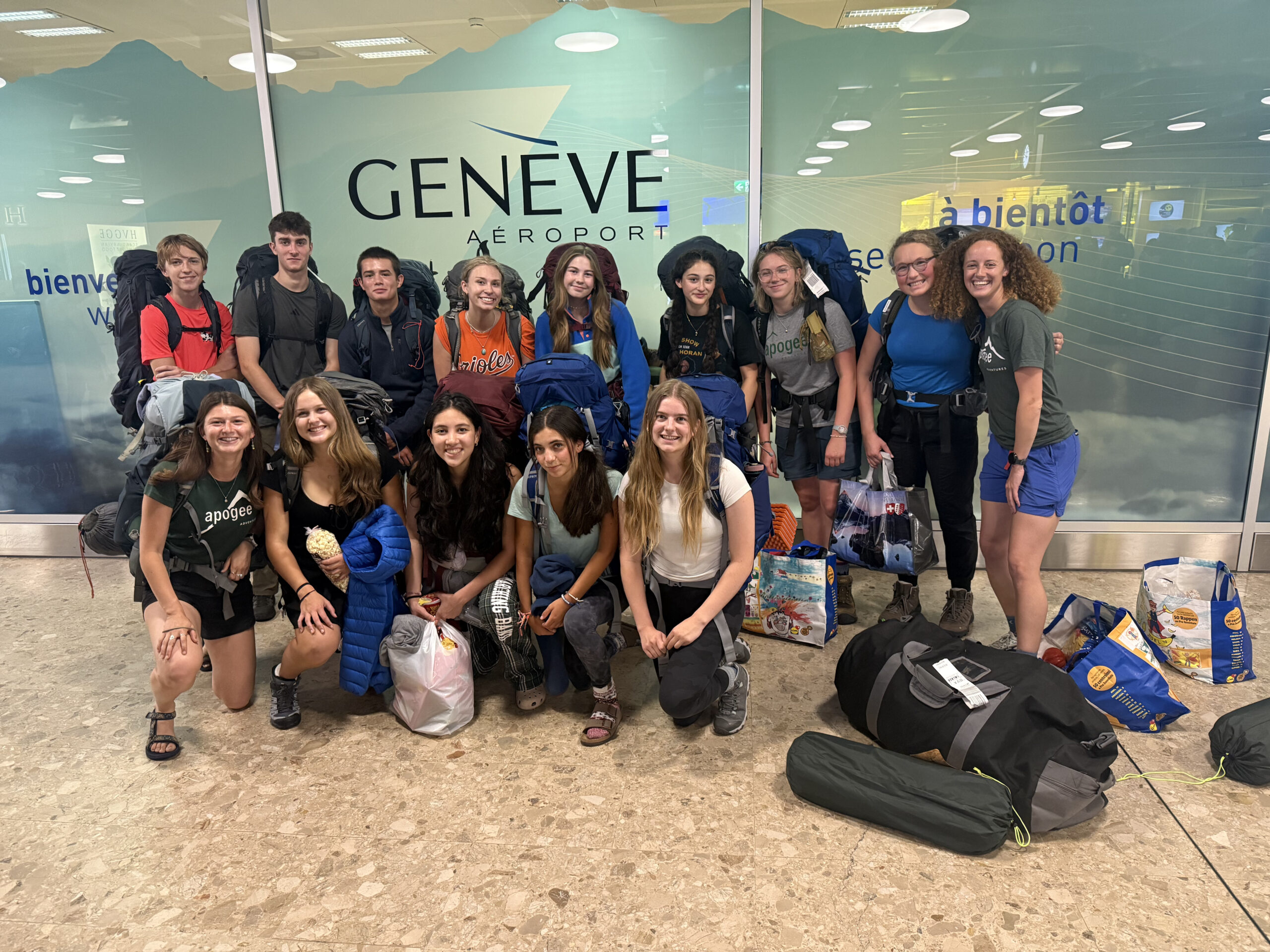
If your teen is headed to one of Apogee’s European adventures in 2026, there’s an important update to know about: the Entry/Exit System (EES), which the European Union rolled out beginning October 12, 2025.
The EES is a new digital border system that applies to all non-EU travelers — including Americans — entering the 29 countries of the Schengen Area (all Apogee European trips are within the Schengen Area). Here’s what to expect:
- No pre-registration required. You don’t need to sign up or fill anything out before your trip. Everything is handled at the border.
- Biometric data collection. On your first crossing, border agents will scan your fingerprints and take a facial image. This replaces the old passport stamp system.
- Expect longer lines — at least initially. The EES has caused longer processing times at some airports as travelers and staff adjust to the new system. Budget extra time when flying into Europe, and if your student has a connecting flight in Europe, make sure there’s plenty of buffer time built in, as they will go through this process at their connecting airport, not at their destination airport.
- No fee. While this may change for 2027 (more on that below), for the summer of 2026, entering the Schengen Area remains free for U.S. passport holders.
One more thing to be aware of on the horizon: the EU’s ETIAS (European Travel Information and Authorization System) is expected to launch in late 2026. ETIAS will require Americans to apply online and pay a small fee (€7) before visiting Europe. But to reiterate, it is not required for 2026 summer travel.
Flying Home at the End of the Trip
We’ve spent most of this blog talking about arriving at your Apogee trip. But what about the return flight home? How does that work? Similarly to the arriving flight, we’ll ask for you to schedule your child’s return flight within a specific time window that we can accommodate within the trip’s logistics. A few details on how return flights work:
- Early Arrival at the Airport: Our groups always aim to be at the airport at least two hours before the first student departs. Yes, this can make for a long day at the airport, but we promise you it’s better than a missed flight!
- Leaders assist with check-in. Your child’s trip leaders will accompany them to the airline’s check-in desk and will help them get squared away with their check-in, including picking up the leaders’ gate pass if your child is flying as an unaccompanied minor.
- Checked baggage. During the check-in process, your child’s trip leader will help them get their bag checked. If possible, please pre-pay for your child’s baggage fees, as this can make for a much smoother check-in process. That said, many major US airlines do not allow for pre-payment of baggage fees for domestic flights. If you cannot pre-pay baggage fees, please make sure your child has funds available to pay for their checked baggage fee on a debit or credit card. If your child does not have funds available or only has cash (most airlines do not accept cash at the airport), we will charge the checked baggage fee to our trip leaders’ credit card and will seek reimbursement from you.
- Returning student phones. Because Apogee is a technology-free program, trip leaders will collect student cell phones at the beginning of the trip and will return them at the end of the trip. It is our goal to return student phones with at least 50% charge (trip leaders will do their best to charge student phones the night before departure). That said, please make sure your child brings a charging cable if they are bringing their phone so they can ensure they have enough battery life for their return travels. Leaders will give students their phones back at the airport, before they check-in for their flights.
- Going through security. Unless your child is flying as an Unaccompanied Minor (more on that above), they will be released from Apogee supervision when they go through security, as the trip leaders will be unable to go through security with your child. Please make sure your child checks airport monitors and stays alert for any gate change announcements or flight delays! They will have their phone (if they brought one), so if you’re nervous about this, text message reminders can be helpful.
- Delays and cancellations on departure day. While we will be tracking your child’s flight and will likely be aware of delays or cancellations in real-time, please communicate with our office as soon as you can if your child’s return flight is delayed or cancelled. Once all students are through security, trip leaders stay in the general vicinity of the airport until all student flights have taken off. If there are delays or cancellations, our staff members will be on hand to assist. In the unlikely event that there are cancellations that cause your child’s flight to be pushed to the following day, our staff will supervise your child for up to an additional 24 hours to allow you to schedule a flight for the following day (in this case, we will charge a fee for the additional lodging, food, and supervision costs incurred).
A Few More Quick Tips
- Arrive early. For domestic flights, aim to arrive at the airport at least 90 minutes before departure. For international flights, give yourself two to three hours.
- Check your airline’s baggage policy. Fees and weight limits vary. We recommend pre-paying for baggage if possible! Checking this before you pack can save you money and headaches at the counter.
- Packing for the Flight: The last page of your child’s Trip Packing List includes packing instructions specifically for students that are flying to their trip start. These are tips we’ve developed over the years that can help cut down on headaches if checked bags are delayed.
- Purchase Travel Protection: Enrolled families will have the option to purchase a travel protection plan exclusive to Apogee families. Regardless if you choose the plan we recommend or a different one, we strongly recommend you purchase a travel protection plan for your child’s trip. Aside from offering tuition reimbursement for covered reasons, most travel protection plans have myriad other benefits, including coverage for lost or delayed baggage, missed connections and flight delays, and other travel issues.
- (International trips only) Pack your passport somewhere accessible — but safe. You’ll need it at check-in, at border control, and potentially at customs. A travel pouch worn under your clothes is a great option.
- Don’t stress if something goes wrong. Flight delays happen. If you find yourself in a bind, flag down an airline employee — that’s exactly what they’re there for — and give Apogee a call.
Still Have Questions? We’ve Got Answers.
This is meant to be a starting point, not an exhaustive manual. Every trip destination is a bit unique when it comes to travel logistics, and we’re always happy to walk families through the specifics.
Reach out to our team with any questions, and check out our full FAQ page for more details on arrival logistics, connecting with leaders, and everything in between.
Ready to start planning? Browse our 2026 programs in Europe, Latin America, the Caribbean, and across the USA at apogeeadventures.com/trips.